
Pump alignment is one of the most critical practices in maintaining the reliability and performance of rotating equipment. In many industrial facilities, pumps are continuously operating, and even a small misalignment between the pump and motor can lead to significant operational issues over time.
In the Philippines, especially in industrial hubs such as Laguna, La Union, and other parts of Luzon, proper pump alignment is often overlooked or rushed during installation. However, global standards such as API 686 clearly emphasize that alignment is not optional—it is a fundamental part of proper machinery installation and commissioning.
WHAT IS PUMP ALIGNMENT?
According to API 686, alignment is defined as:
“The process of reducing the misalignment of two adjacent shafts connected by a coupling so that the center of rotation for each shaft is as near collinear as practical during normal operation.”
In simpler terms, pump alignment ensures that the pump shaft and motor shaft are perfectly aligned so that they rotate smoothly without inducing unnecessary stress on the system.
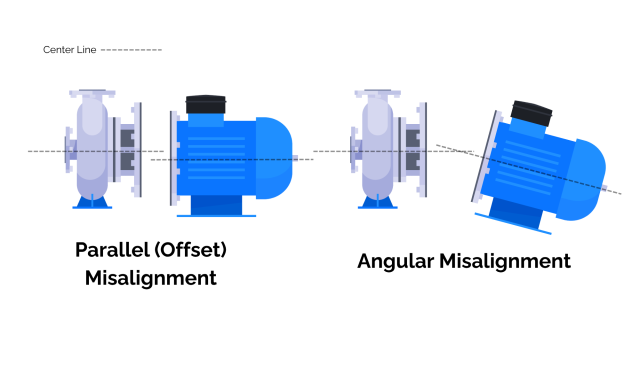
This includes two primary types of misalignment:
1. Angular Misalignment – when shafts are at an angle
2. Parallel (Offset) Misalignment – when shafts are parallel but not aligned
WHY SHOULD YOU HAVE PROPER PUMP ALIGNMENT?
1. Prevents Premature Equipment Failure
Misalignment is one of the leading causes of failure in rotating equipment. Bearings, seals, and couplings are designed to operate under specific conditions. When misalignment occurs, these components are subjected to additional loads, resulting in accelerated wear and early failure.
2. Reduces Vibration
One of the most immediate signs of misalignment is excessive vibration. High vibration levels not only damage equipment but also affect surrounding structures and systems. Proper alignment ensures smooth operation and significantly reduces vibration levels.
3. Improves Energy Efficiency
Misaligned equipment requires more power to operate. This leads to increased energy consumption and higher operating costs. Over time, this inefficiency can become a significant financial burden for facilities.
4. Ensures Compliance with Standards
API 686 specifies that alignment is part of proper installation and commissioning procedures. This means that skipping or poorly executing alignment is a deviation from accepted engineering practices.
5. Prevents Mechanical Seal Failures
Mechanical seals are highly sensitive to misalignment. Even small deviations can cause leakage, contamination, and eventual failure of the seal.
TYPES OF PUMP ALIGNMENT METHODS
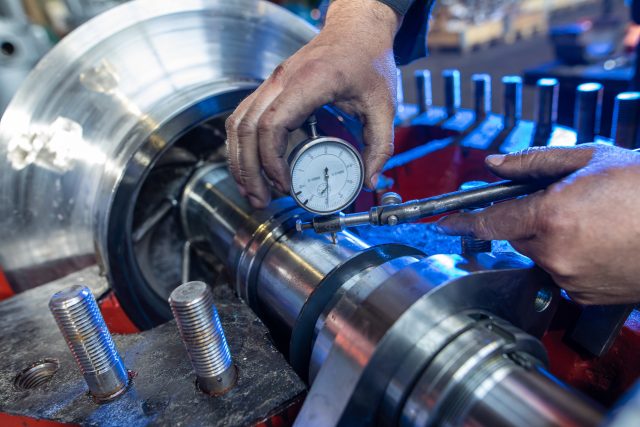
1. Dial Gauge Alignment
This is the most commonly used method in the field. It involves using dial indicators mounted on the coupling to measure misalignment.
Advantages:
– Low cost
– Widely available
– Reliable when done correctly
Keywords:
– pump alignment dial gauge
– dial indicator pump alignment
– pump motor alignment dial gauge
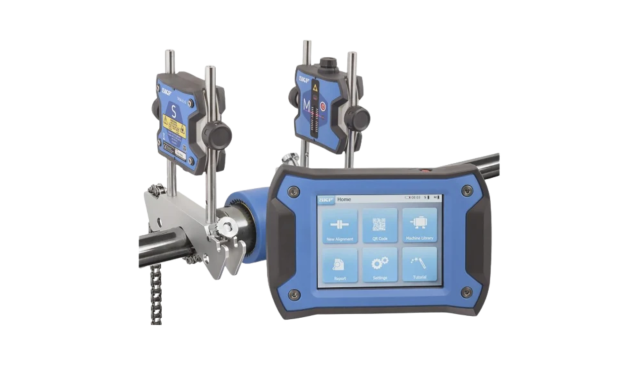
2. Laser Alignment
Laser alignment uses advanced tools to provide highly accurate alignment measurements.
Advantages:
– High precision
– Faster setup
– Easier data interpretation
Keywords:
– laser alignment of pump and motor
– laser alignment pump motor
PUMP ALIGNMENT TOOLS
Proper alignment requires the right tools:
– Dial gauge for pump alignment
– Pump alignment tool kits
– Pump shaft alignment tools
– Motor coupling alignment tools
– Laser alignment systems
Each tool serves a specific purpose depending on the accuracy required and the criticality of the equipment.
APPLICATIONS OF PUMP ALIGNMENT
Different systems require different alignment approaches:
– Centrifugal pump alignment
– Vertical pump alignment
– Fire pump alignment
– Water pump alignment
Each application has its own challenges and requirements.
STEP-BY-STEP ALIGNMENT PROCESS
Step 1: Check Soft Foot
Ensure that all feet of the motor are evenly seated. Soft foot can significantly affect alignment accuracy.
Step 2: Install Measurement Tools
Mount dial indicators or laser alignment tools on the coupling.
Step 3: Take Measurements
Rotate the shafts and record readings at different positions.
Step 4: Adjust Alignment
Use shims for vertical corrections and move the motor horizontally for offset adjustments.
Step 5: Recheck Alignment
Repeat measurements until alignment is within acceptable tolerance.
Step 6: Final Alignment After Piping
API 686 emphasizes that final alignment should only be completed after piping strain has been checked and corrected.
THERMAL GROWTH CONSIDERATION
One advanced concept in alignment is thermal growth. Machines expand when they reach operating temperature. This means that alignment done at ambient conditions may not be accurate during operation.
To address this, engineers apply intentional offsets during alignment to compensate for thermal expansion.
COMMON CAUSES OF MISALIGNMENT
– Pipe strain
– Improper installation
– Soft foot
– Thermal expansion
– Worn couplings
Understanding these causes helps prevent recurring alignment issues.
CONCLUSION
Pump alignment is not just a maintenance activity—it is a critical engineering process that directly affects equipment reliability, efficiency, and lifespan.
By following API 686 guidelines and using proper alignment techniques, facilities can significantly reduce downtime, maintenance costs, and equipment failures.
CALL TO ACTION
Need professional pump alignment services in the Philippines?
We offer:
– Pump and motor alignment
– Laser alignment
– Dial gauge alignment
– Troubleshooting and corrective services
Contact PumpExperts Philippines today for reliable and professional alignment services.